A method
How to budget as a couple without fighting about money
I've kept my family's budget for 15 years, mostly in spreadsheets. Logging was always easy. The hard part was finding out we'd overspent after the month was over, when there was nothing left to fix. This is the method we ended up with. It works in a spreadsheet, a notebook or any app. Volodymyr Sverediuk, founder of YABA
Step 1. Agree on one shared place
A shared budget breaks when each of you sees a different picture: one has a spreadsheet, the other an app, and a third of the spending is nowhere. Pick one place everything goes into, equally open to both of you. You don't have to merge all your money: personal accounts are fine, as long as family spending is visible together.
Step 2. Log daily, not at the end of the month
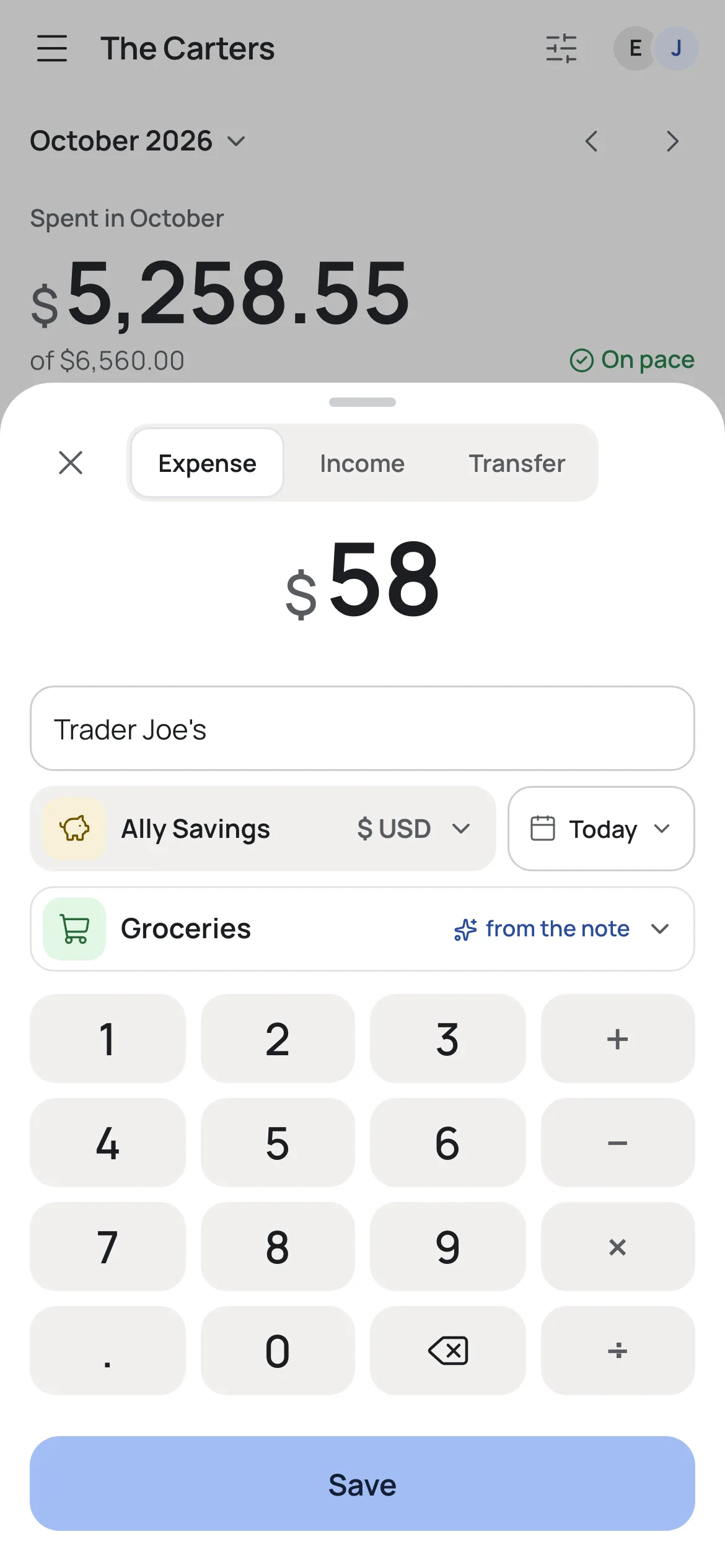
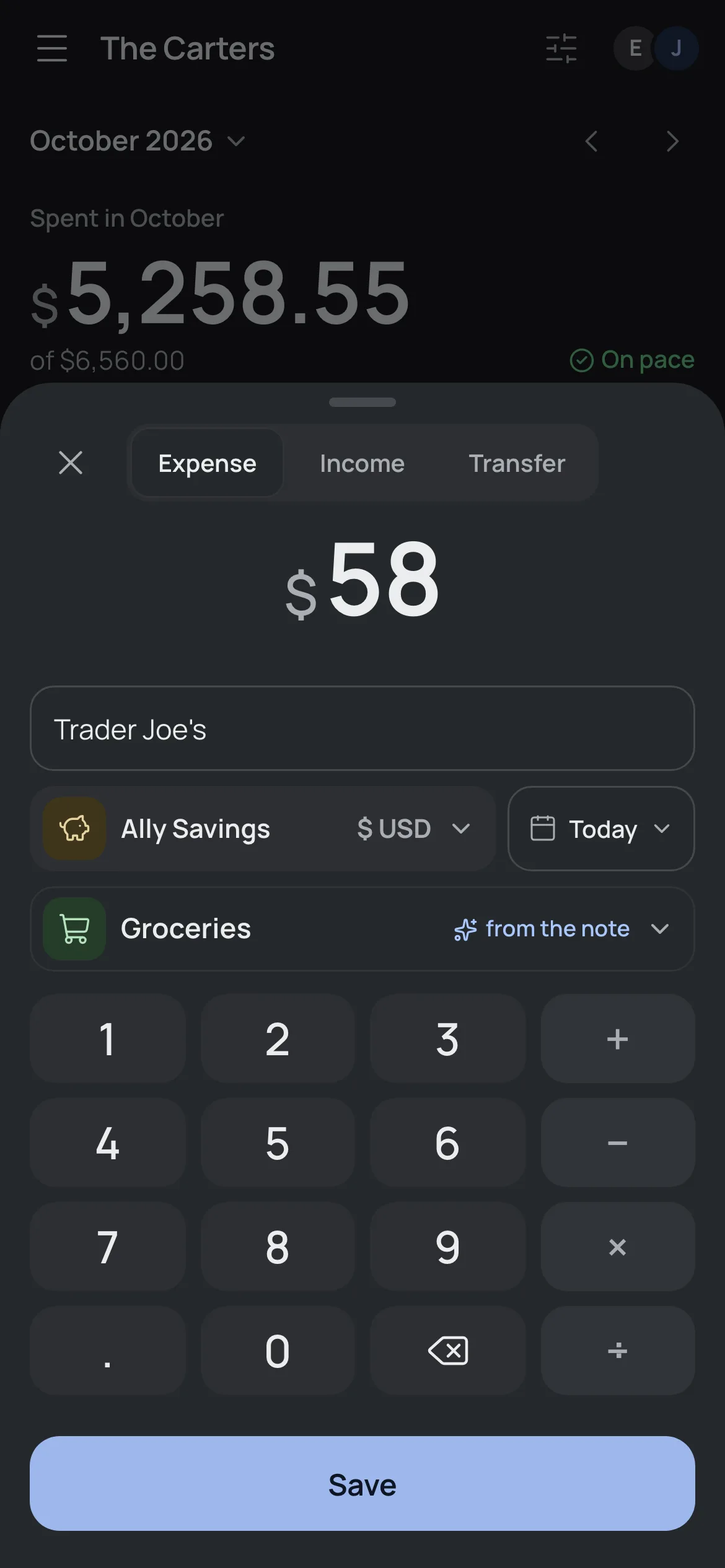
You can't rebuild a month from memory, and a bank statement doesn't know about cash or that the supermarket run was really a present. The rule is simple: log right after you pay, ten seconds. Card payments are best pulled in from the bank automatically, so only cash is left to type.
Step 3. Plan the month per category
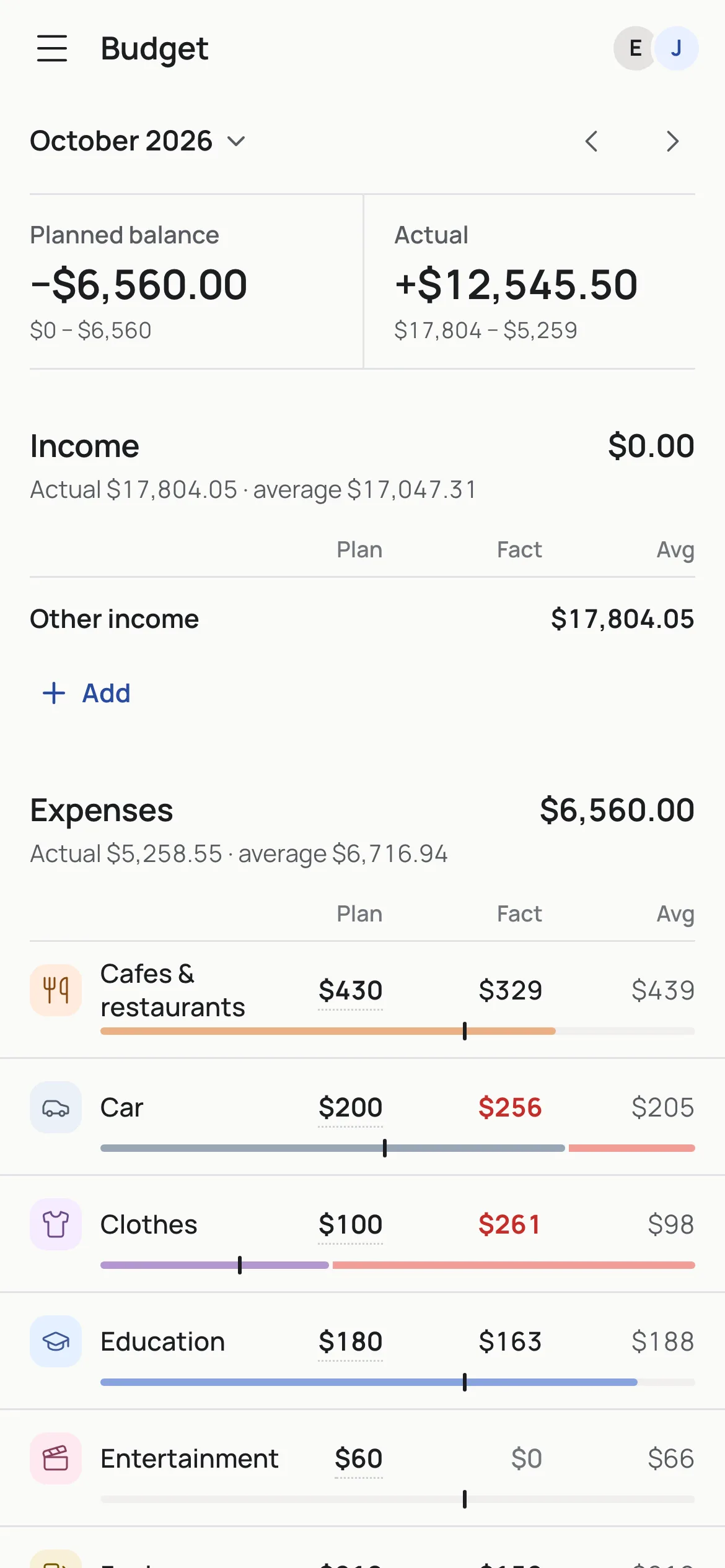
A single total like "we spend 40,000" tells you nothing mid-month. Split it into categories: groceries, eating out, transport, kids, home, subscriptions. Start from what you actually spent over the last 3 months instead of what you'd like to spend. Two details help:
- A month that starts on payday. If you're paid on the 5th, let the budget month start on the 5th.
- Bills on their own. Rent, mortgage, utilities and subscriptions have their days. Knowing them shows what's really left for everyday spending.
Step 4. Watch the pace, not the total
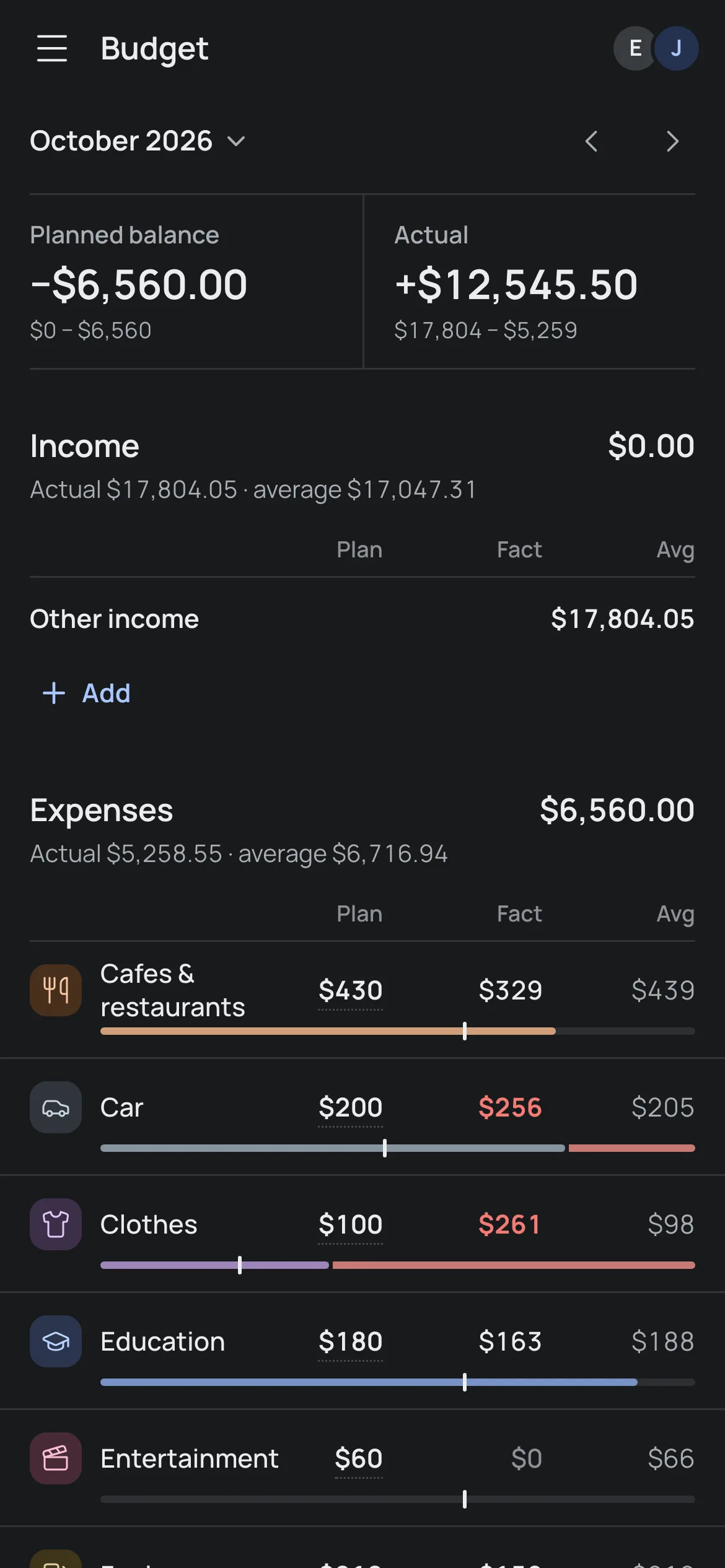
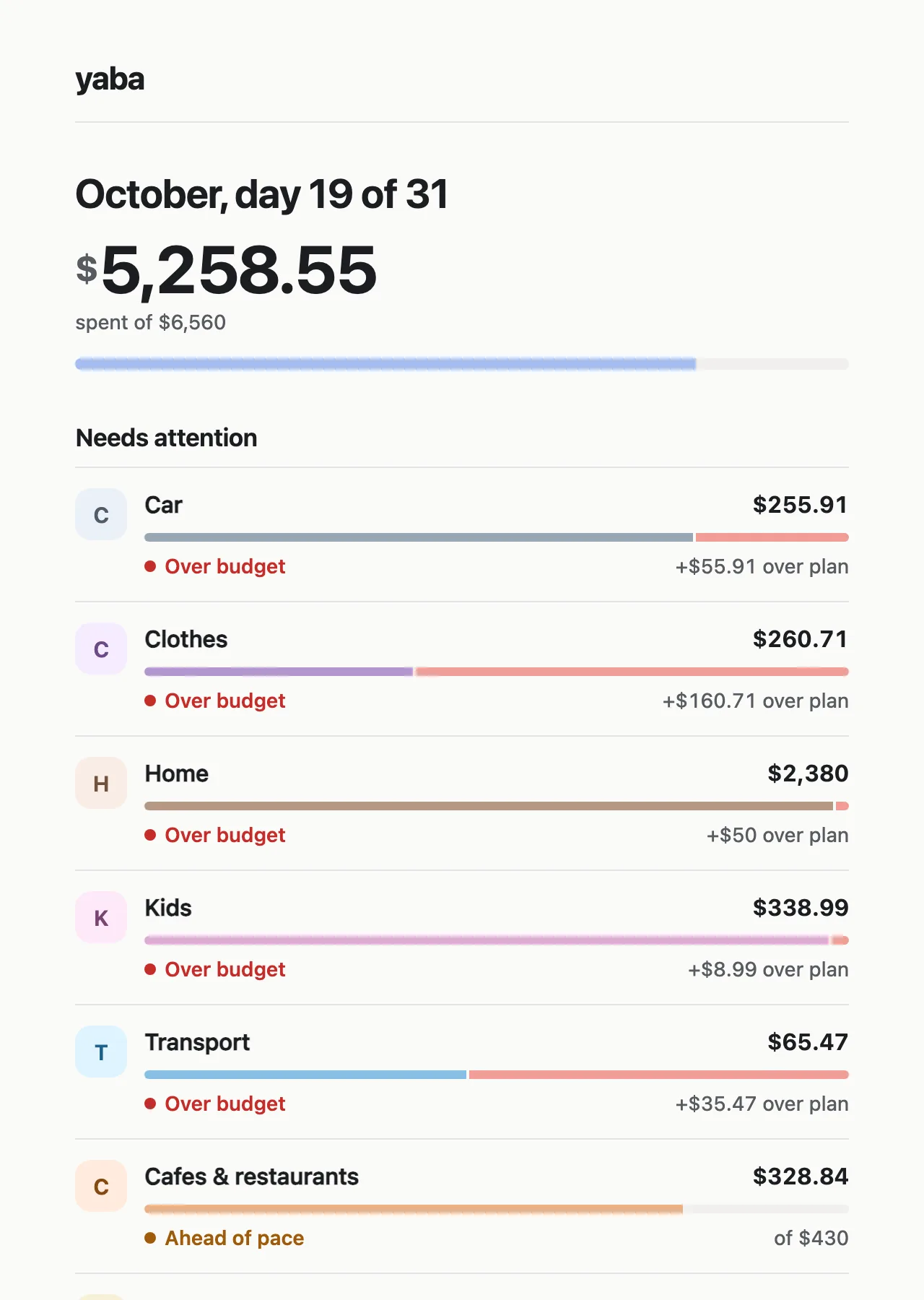
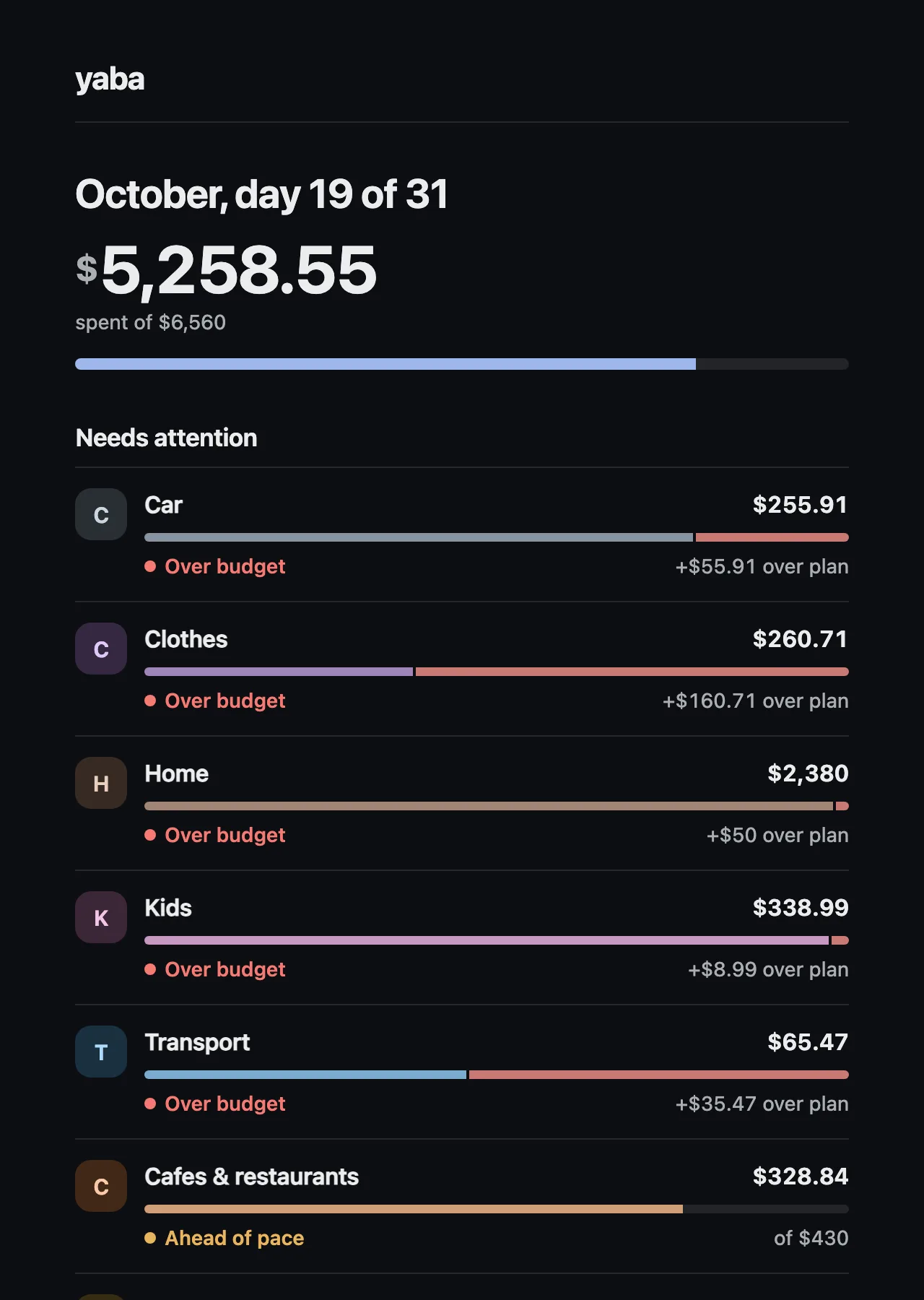
The heart of the method: compare what you've spent with what you should have spent by today, rather than with the whole limit. If 70 % of the eating-out budget is gone by the 12th, the month won't fit, and it's better to know on the 12th than on the 31st. Then you still have 19 days to slow down or deliberately move money from another category.
Talking about money as two
- Facts over blame. When you both see the same feed, the talk is about numbers instead of who spends more.
- A short weekly check-in. Five minutes on Monday: what went over plan, what to change.
- Personal stays personal. Agree on an amount each of you spends without explaining.
- One-offs aren't failures. Keep repairs or a trip separate so they don't distort a usual month.
Spreadsheet or app
A spreadsheet is flexible and free, but it doesn't pull in the bank, is awkward on a phone and never warns you. We built YABA around this method: both partners keep one live budget, Monobank logs for you, a plan per category with a month that starts on payday, a forecast that knows your bills, and one morning email when something's off. Try the demo or start free.
Questions
What people ask before they start.
Do we have to merge all our money?
No. It's enough to see shared spending together; personal accounts can stay personal.
How much time does it take?
Ten seconds an entry and five minutes a week, if cards sync from the bank.
Where do we start the plan?
From actual spending per category over the last 3 months, not the numbers you wish for.
What if a category is already over?
Slow down until the month ends, or deliberately move money from a category with room to spare.