Private beta

Know your month before it ends.

One workflow for your household. Track daily, plan the month, and hear about trouble while you can still fix it.
One email when a wave opens. Nothing else.

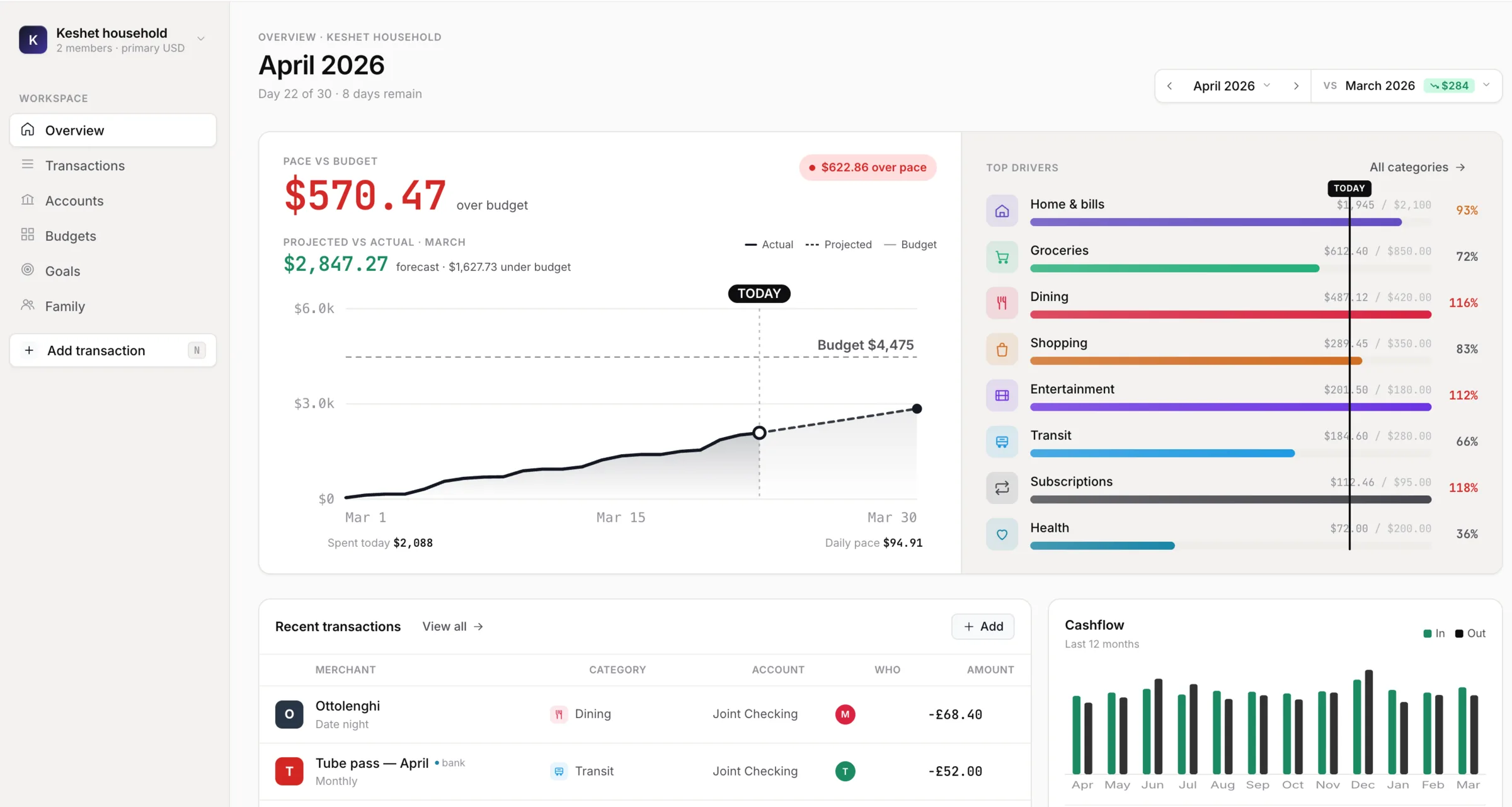
The Yaba overview screen: a pace-versus-budget headline reading $570.47 over budget, a projected-versus-actual chart forecasting $2,847.27, and a top-drivers list showing Dining at 116% of budget.
The workflow

Three steps, every month.

01

Track what actually happens

Bank sync for the automatic part, ten-second entry for the rest. Every record knows who spent it, from which account, in which currency.

02

Plan before the month starts

Budgets per category, goals with real dates. Yaba works out the monthly contribution a goal needs, so the plan is arithmetic instead of hope.

03

Know before it too late

Yaba checks your pace every day and forecasts where the month lands. The advisor speaks up while there are still two weeks to act.

Dining is on pace to overshoot by $94.Shift $80 from Entertainment?

The app

A look inside.

The Budgets screen: every category with spend against budget, over-by badges on Dining, Entertainment and Subscriptions, a total-budget donut, and an AI rebalance button.
BudgetsSpot the overshoot earlyEvery category against its budget on day 22. Dining is at 116%, Subscriptions at 118%. One tap asks the AI to rebalance the rest of the month.
The Transactions ledger: filters by person and category, merchant logos, per-member attribution, and an Import CSV button.
TransactionsEvery record, and who it belongs toFilter by person, category or type. Bank-synced rows arrive already categorised. Everything else imports from CSV in one click.
The add-record drawer: expense, income and transfer tabs, an amount field with currency, source, destination account, who it belongs to, and a date.
Daily entryTen seconds, then back to your dayExpense, income or transfer. Pick the amount, the account and who it was for. That's the whole thing, and it's what keeps the forecast honest.

Getting your data in

Three ways in.

Bank sync

Connect your monobank account. Transactions arrive as they happen, already categorised.

CSV import

Drop an export from any bank or app. Years of history, mapped and merged in one pass.

REST API

Tokens, docs, and a /transactions endpoint. Treat Yaba as a framework and build your own layer on top.

Why I built this

Fifteen years of spreadsheets.

I have kept my family's budget for fifteen years, mostly in spreadsheets. Tracking was never the hard part. The hard part was finding out we had overspent once the month was already over, when there was nothing left to do about it.

Yaba is the workflow I ended up with, turned into software. Track daily, plan properly, and get told early enough that a small correction is still enough.

Volodymyr SverediukVolodymyr Sverediukbuilding Yaba
Title card of the talk Talk Money culture, or how to control your expenses pivorak Lviv Ruby MeetUp
Private beta

Get in before the first wave.

Early members help shape what ships.